


Transformation of educational work in medical universities as a factor in the formation of professional values of future doctors
https://doi.org/10.21626/j-chr/2026-3(48)/10
Abstract
Relevance. The systemic staffing crisis in Russian healthcare, exacerbated by the value gap between generations of doctors, requires a revision of approaches to educational work in medical universities. Less than 60% of medical graduates are employed in their specialty, and up to 40% of young specialists consider leaving the profession within the first years of work. Traditional administrative and financial measures for staff retention demonstrate limited effectiveness, as they do not solve the key problem – the lack of sustainable professional identity and meaningful connection with the healthcare system among modern graduates.
Purpose: to develop and substantiate a model for transforming educational work in medical universities, aimed at forming professional values and sustainable identity of future doctors as a tool for overcoming the staffing shortage.
Materials and Methods. The study included a theoretical analysis of the problem of staffing shortages and value gaps; an empirical study of value orientations of medical students using M. Rokeach's methodology (n=194); an analysis of the pilot implementation of the youth policy transformation project "MEDMOL" in medical universities in Russia (October 2024 – June 2025). Methods of systemic and comparative analysis, design, participant observation, and statistical data processing methods were applied.
Results. A systemic value gap was identified between the traditional values of Soviet-era doctors (service, collectivism, dogmatism) and the value orientations of modern graduates (self-realization, individualism, pragmatism). It was empirically confirmed that students' involvement in extracurricular activities statistically significantly affects the hierarchy of terminal and instrumental values, shifting the focus towards professional self-realization, independence, and responsibility. A three-component model of educational work transformation has been developed and tested, integrating the normative Standard of Youth Policy, the emotional brand "MEDMOL", and a multi-level mentoring system.
Conclusions. The key cause of the staffing crisis is not the quantitative shortage of graduates, but their value disorientation and weak professional identity. The transformation of educational work in medical universities should be carried out through the creation of a holistic educational environment, where the value messages of the standard are reinforced by the emotions of the brand and the living example of mentors. The developed model has received the status of an official Standard of the Ministry of Health of Russia and is recommended for implementation in 48 medical and pharmaceutical universities in the country.
About the Author
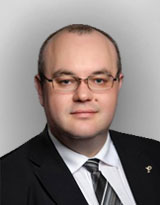
A. A. Kuznetsova
Kursk State Medical University
Russian Federation
Russian Federation
Alesya A. Kuznetsova - Candidate of Sciences in Psychology, Associate Professor, Head of the Department of Normal Physiology
305041, 3 K. Marx str., Kursk
References
1. Vishnyakov N.I., Kirillov A.V., Kochorova L.V., Kashina O.S. Nekotorye voprosy organizatsii obshchevrachebnoy praktiki v strukture meditsinskogo universiteta [Some issues of organizing general medical practice in the structure of a medical university]. Problemy gorodskogo zdravookhraneniya: Sb. nauchnykh trudov. Saint Petersburg, 1997, iss. 2, pp. 70-78. (In Russian).
2. Korchagin V.P. Problemy truda i zarabotnoy platy v zdravookhranenii [Problems of labor and wages in healthcare]. Ekonomika zdravookhraneniya. 1996, no. 3, pp. 5-11. (In Russian).
3. Kuz'menko M.M. Meditsinskie kadry: nauchno-prakticheskie aspekty (sovremennoe sostoyanie problemy) [Medical personnel: scientific and practical aspects (current state of the problem)]. Problemy sotsial'noy gigieny i istoriya meditsiny. 1996, no. 4, pp. 42-47. (In Russian).
4. Matveev E.N. Nekotorye problemy razvitiya kadrovoy sistemy zdravookhraneniya v Rossiyskoy Federatsii [Some problems of the development of the healthcare personnel system in the Russian Federation]. Povyshenie effektivnosti sluzhb zdravookhraneniya Rossiyskoy Federatsii: Materialy 5-y ezhegodnoy Rossiyskoy nauchno-prakticheskoy konferentsii NPO Medsotsekonominform. Moscow, 1998, pp. 84-94. (In Russian).
5. Molchanova L.N., Kuznetsova A.A., Kas'yanova K.V. Osobennosti sotsial'nykh ustanovok mezhlichnostnogo vzaimodeystviya "vygorayushchikh" volonterov-medikov, rabotayushchikh v usloviyakh chrezvychaynykh situatsiy [Features of social attitudes of interpersonal interaction of "burning out" medical volunteers working in emergency situations]. Kollektsiya gumanitarnykh issledovaniy. 2025, no. 4 (45), pp. 6-20. (In Russian).
6. Polyakov I.V., Zelenskaya T.M. Podgotovka kadrov i rynok trudovykh resursov v zdravookhranenii [Personnel training and the labor market in healthcare]. Problemy gorodskogo zdravookhraneniya: Sb. nauchnykh trudov. Saint Petersburg, 2000, iss. 5, pp. 350-351. (In Russian).
7. Stukolova T.I. O zadachakh meditsinskogo i farmatsevticheskogo obrazovaniya na 2001-2005 gody i na period do 2010 goda po realizatsii Kontseptsii razvitiya zdravookhraneniya i meditsinskoy nauki v Rossiyskoy Federatsii [On the tasks of medical and pharmaceutical education for 2001-2005 and for the period up to 2010 on the implementation of the Concept of the development of healthcare and medical science in the Russian Federation]. O khode realizatsii Kontseptsii razvitiya zdravookhraneniya i meditsinskoy nauki zadachakh na 2001-2005 gody i na period do 2010 gody: Sb. dokladov Kollegii MZ RF. Moscow, 2001, pp. 152-155. (In Russian).
8. Cherepanova I.S. Kontseptsiya kadrovoy politiki i sovershenstvovanie deyatel'nosti kadrovoy sluzhby v zdravookhranenii [The concept of personnel policy and improvement of the personnel service in healthcare]. Razvitie sistemy obespecheniya kachestva meditsinskoy pomoshchi v sovremennykh usloviyakh i problemy optimizatsii struktury zdravookhraneniya: Materialy VI nauchno-prakticheskoy konferentsii. Moscow, 2001, pp. 253-255. (In Russian).
9. Shevchenko Yu.L. Vrach i gosudarstvo, zdravookhranenie i nravstvennost', meditsina i pravo [Doctor and state, healthcare and morality, medicine and law]. Ekonomika zdravookhraneniya. 1999, no. 11-12, pp. 5-13. (In Russian).
10. Ellanskiy Yu.T., Zhdanov V.T. Kharakteristika kadrovykh resursov krupnoy gorodskoy mnogoprofil'noy bol'nitsy [Characteristics of the personnel resources of a large urban multidisciplinary hospital]. Problemy gorodskogo zdravookhraneniya: Sb. nauchnykh trudov. Saint Petersburg, 2001, iss. 6, pp. 213-216. (In Russian).
11. Abel-Smith B., Mossialos E. Cost containment and health care reform: a study of the European Union. Health policy. 1994, vol. 28, no. 2, pp. 89-112.
12. Beske F., Ruschmann H.H. Zur Frage des Bedarfs an Ärzten im öffentlichen Gesundheitswesen. Off Gesund Wesen. 1991, no. 1, pp. 1-3.
13. Chabrun R.G. Le service national de santé Italien. Conc. med. 1981, vol. 103, no. 26, pp. 4409-4412.
14. De Jong R.N. The nervous system complications in diabetes mellitus with special reference to cerebrovascular changes. J Nerv Ment Dis. 1950, vol. 111, pp. 181-206.
15. Donaldson C., Gerard K. Paying general practitioners: Shedding light on the review of health services. J.K. Coll. Gen. Pract. 1989, vol. 39, no. 320, pp. 114-117.
16. Etienne J.P. La démographie médicale: des médecins pour quoi faire? Conc. Med. 1981, vol. 103, no. 37, pp. 5999-5912.
17. Gregg E.W., Brown A.A. Cognitive and Physical Disabilities and Aging-Related Complications of Diabetes. Clinical Diabetes. 2003, vol. 21, no. 3, pp. 113-118.
18. Marks P.A. Academic health centers and the federal government: a partnership in research, education and patient care. Bull. N.Y. Acad. Med. 1981, vol. 57, no. 7, pp. 470-475.
19. Sadanand S., Balachandar R., Bharath S. Memory and executive functions in persons with type 2 diabetes: a meta-analysis. Diabetes Metabolism Research Review. 2016, vol. 32, no. 2, pp. 132-142.
20. Vincent C., Hall P.A. Executive Function in Adults with Type 2 Diabetes: A Meta-Analytic Review. Psychosomatic Medicine. 2015, vol. 77, no. 6, pp. 631-642.
Review
For citations:
Kuznetsova A.A. Transformation of educational work in medical universities as a factor in the formation of professional values of future doctors. The Collection of Humanitarian Studies. 2026;(3):109-118. (In Russ.) https://doi.org/10.21626/j-chr/2026-3(48)/10
Views:
23
JATS XML




 Email this article